
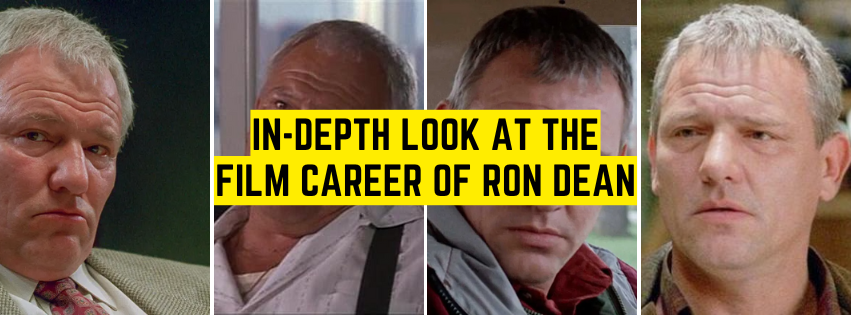
The late Ron Dean, who passed away on October 5, 2025, at age 87, left behind a long, varied, and quietly powerful legacy in American film and television. Known for his gravelly voice, unassuming presence, and ability to inhabit tough-guy and law-enforcement roles, Dean carved out a career as a reliable character actor whose face became familiar to millions, even if his name wasn’t always front and center.
From Humble Beginnings to Silver Screen
Born and raised in Chicago, Dean’s life was far from easy. After a troubled youth — including a violent encounter with law enforcement when he was a teenager, resulting in a prison sentence — he turned his life around through theatre and acting. After his release, Dean immersed himself in Chicago’s theatre world, honing his craft and building the foundation for a decades-long career on stage and screen.
His film debut came in 1976 with The Last Affair, where he played “David.” Though not a major hit — notable critics such as Roger Ebert and Gene Siskel criticized the movie for its lack of coherent storytelling and regard for structure or character depth — that first credit marked the beginning of Dean’s steady climb in Hollywood.
Building a Niche — The Reliable Detective & Everyman Roles
Over the years, Ron Dean became a go-to actor for detective, guard, policeman, and other “blue collar / law enforcement” characters. This niche served him well: across the 1980s, 1990s, and into the 2000s, he delivered memorable turns in a wide variety of films.
Some of his better-known film appearances include:
- Risky Business (1983) — as a detective.
- The Breakfast Club (1985) — he played “Mr. Clark,” the strict father of one of the teens, contributing to the film’s grounded realism.
- Cocktail (1988) and The Color of Money (1986) — small roles that added to his growing filmography in major studio pictures.
- The Fugitive (1993) — arguably one of his most recognized roles, where he played a Chicago homicide detective interrogating Harrison Ford’s character.
- Rudy (1993) — an example of how Dean’s characters extended beyond crime dramas into sports-drama territory.
- The Dark Knight (2008) — one of his final big screen appearances, again as a detective, showcasing his enduring typecasting but also his lasting presence in major motion pictures over decades.
What stands out is the consistency. Dean wasn’t usually the leading man. Instead, his strength lay in creating believable, lived-in side characters — the cops, the guards, the fathers, the coaches — who added texture and realism to films that ranged from teen dramas to blockbusters.
Spotlight on “Fatal Encounter”
A lesser known but interesting entry in Dean’s filmography is Fatal Encounter (1990), directed by Henri Charr. While this film never reached the fame of his big-ticket titles, it remains a noteworthy example of Dean working outside the major studio system.
In Fatal Encounter, Dean acts alongside names such as Karen Black and Dennis Cole. Though it didn’t become a blockbuster, his participation underscores his willingness to take diverse roles — even in lesser-known or independent films — rather than just sticking to high-profile projects. This willingness reflects the character-actor spirit: sometimes stepping away from the limelight, but always working, always contributing.



Life, Redemption, and Mentorship
Part of what made Ron Dean’s story resonate is not just his acting career — but his personal journey. After a troubled childhood and early adulthood, he found redemption through theatre and performance. He used acting as a second chance, transforming a life derailed by violence and incarceration into one defined by craft, discipline, and community.
By the time of his passing in 2025, Dean was remembered not only for his many credits — spanning from the mid-1970s through 2016 — but also for the respect he commanded among fellow actors, especially in his hometown of Chicago.
Why Ron Dean Matters — Even If You Didn’t Know His Name
In film history, actors like Ron Dean are often overlooked. They’re not the stars — they don’t always headline the poster. But they are the backbone. They help create the world around the stars, make villains believable, make side characters memorable, and essentially make films feel lived in.
His career demonstrates how one’s face, voice, and presence — even without leading-man charm — can become iconic in their own way. Whether playing a skeptical father in a teen classic, a hard-nosed detective interrogating an accused man, or a small-town coach cheering on underdogs, Dean brought authenticity to each role.
Even in smaller-scale films like Fatal Encounter, Dean’s participation is telling: he chose variety, challenge, and craft over glitz and fame. And that speaks to a work ethic and humility that are rarer than leading-man glamor.
In reflecting on Ron Dean’s career, it becomes clear that his legacy is not built on flashy heroics or Oscar speeches — but on steady, solid performances that enriched countless films. From major studio hits to under-the-radar dramas like Fatal Encounter, he remained a committed actor until retirement. And through that commitment, he left a lasting imprint: not as a star, but as a solid, reliable, unforgettable presence in American cinema.